
A new house can feel strangely anonymous. The surfaces are perfect, the edges are sharp, and nothing in the room has a history. Natural materials solve this slowly. Oak darkens where hands rest, limestone softens underfoot, linen creases into a map of the evenings it has seen, and brass loses its shine exactly where it is touched most.
Designers call this patina, and it is the closest thing the built world has to memory. Choosing materials that age well is not nostalgia. It is a practical strategy for making a home feel finished before it is old.
Why patina matters
Synthetic surfaces are designed to look identical on day one and day one thousand. That sounds efficient until you live with it. A scratch on laminate is damage; a scratch on oak is a story. The difference is not only aesthetic — it changes how relaxed you feel in the room.
Patina also solves a design problem. Perfect surfaces demand perfect rooms. A floor that already carries a little wear gives you permission to put your feet up, to let children draw at the table, to host without anxiety.
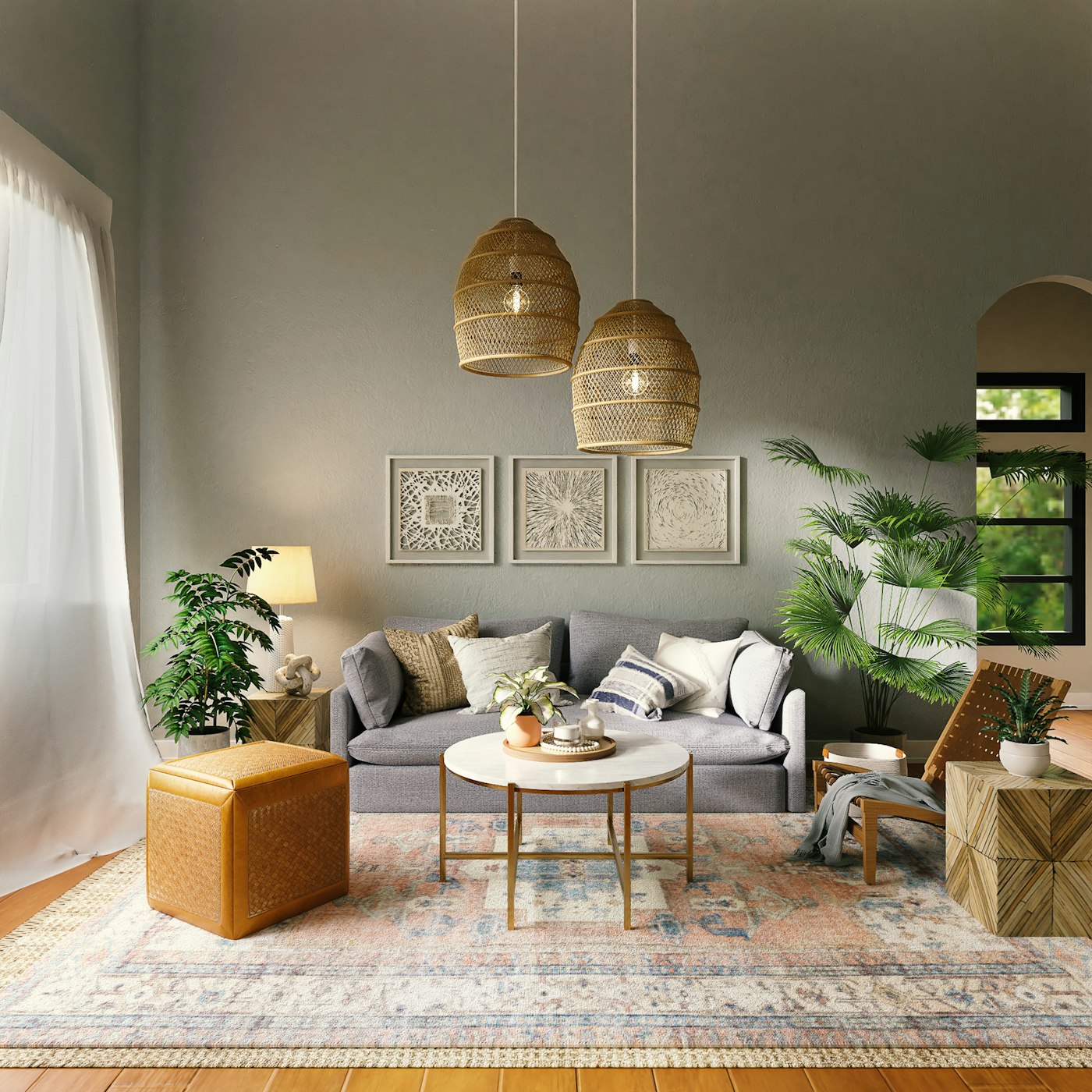
The core palette
We return to the same short list on almost every project. It is not exotic, and that is the point: these materials are available, repairable and compatible with one another.
- European oak — warm, hard-wearing and easy to sand back. Use a matte oil rather than a plastic lacquer.
- Limestone or travertine — softer than marble and more forgiving. Honed finishes hide everyday marks.
- Linen and wool — breathable, sound-absorbing and genuinely repairable. Loose covers are worth the extra cost.
- Solid brass — unlacquered, so it develops a living finish. Avoid brass-plated zinc, which chips.
- Lime plaster — a wall finish with depth that paint cannot imitate, and one that can be patched.
Combining them without noise
The trick is to limit the number of textures, not the number of tones. A room with oak, linen, plaster and one metal reads as calm. Add rattan, marble, leather, ceramic and glass and the eye has nowhere to rest.
Let one material lead each room. In a kitchen it might be stone; in a bedroom, linen; in a hallway, timber. The others play supporting roles. This hierarchy is what separates a layered room from a busy one.
Maintenance is part of the design
Natural materials need care, and that care should be designed in. Choose a soap-treated worktop you can re-oil yourself. Specify removable covers rather than fixed upholstery. Keep a small tin of the original finish in a cupboard. Ten minutes twice a year is usually enough.
Understanding how surfaces change — oxidation, moisture movement, the way oils polymerise — makes those choices much less mysterious. The concept of patina covers both the chemistry and the aesthetics, and it is worth reading before you specify a finish.
Natural materials also change how a small room feels, because texture adds depth where space is limited. Our guide to designing compact rooms shows how a few well-chosen surfaces can make a small plan feel generous.
Buy less, choose better, and let time do the styling. A room full of honest materials will look more expensive in five years than it does today — and that is a rare thing to be able to say about anything.

