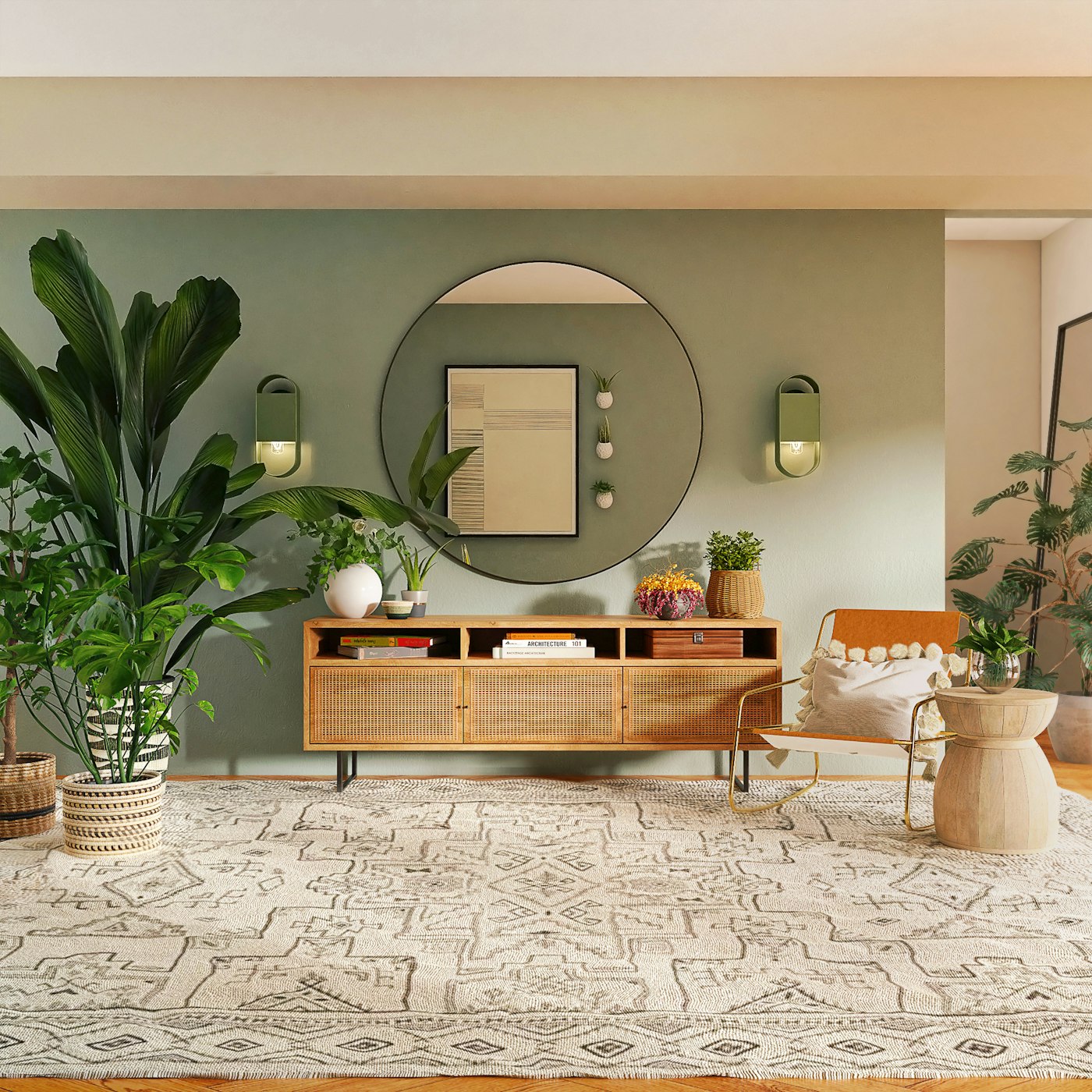
Ask most people what is wrong with a room and they will point at the furniture. Ask a designer and they will usually look up. Light is the material we notice last and feel first: it decides whether a corner is inviting, whether a painting sings, whether a room feels generous or mean.
Yet most homes are lit by a single ceiling fixture in the middle of the room. It is efficient, inexpensive and almost always wrong. Good lighting is not brighter — it is layered, dimmable, and placed at the height where people actually live.
The three layers that matter
Think of a room as needing three kinds of light working together. Ambient light is the general wash that lets you move safely. Task light is focused and directional: reading, cooking, working. Accent light is the layer that creates atmosphere — a picture light, a low lamp, a candle-height glow along a wall.
When all three are on separate circuits, a single room can shift from bright morning to intimate evening without moving a stick of furniture. That flexibility is the real luxury.

Height is the secret
Light at eye level flatters people; light directly overhead flattens them. This is why restaurants hang pendants low over tables and why the most comfortable living rooms have lamps at shoulder height. A good rule: at least half the light in a living room should come from below eye level.
Wall lights are the most underused tool in residential design. A pair of sconces at 1.6 metres will do more for a hallway than any chandelier, and they free up floor space in small rooms.
Practical rules we use on every project
- Dimmable everywhere. Every circuit, including the bathroom, should dim to at least ten percent.
- Warm, not yellow. 2700–3000K suits most homes; keep 4000K for garages and utility rooms.
- Two lamps per living room minimum. One beside each seating group, both with shades that soften the bulb.
- Never light a wall evenly. Grazing light across texture is more beautiful than washing it flat.
- Add a low night layer. A plug-in lamp or two at ankle height makes evening rooms feel like a hotel suite.
Lighting a renovation
If walls are open, decide lighting before plasterboard goes up. Cabling is cheap at that stage and expensive afterwards. For a deeper technical grounding, the principles of lighting design cover colour rendering, illuminance and glare — the vocabulary you need when talking to an electrician.
Light also changes colour. The same sage wall can look grey in cool light and olive in warm light, which is why we choose finishes and lamps together rather than in isolation. Our guide to choosing a colour palette that ages well explains how to test paint under the light you actually live with.
Finally, live with the layers for a week before adding more. Most rooms do not need another fixture; they need the ones they have to be on the right circuit, at the right height, with the right bulb. Get those three things right and the room will feel finished long before the furniture is.