
Bedrooms are usually decorated last. The living room gets the budget, the kitchen gets the planning, and the bedroom gets whatever is left over. Yet it is the room where we spend a third of our lives, and the one most directly connected to how we feel the next day.
A bedroom designed for rest is not simply a pretty room. It is a room with a clear job: to make sleep easy and waking gentle.
Start with darkness and quiet
Light is the strongest signal our bodies use to decide when to sleep. Blackout curtains or a lined blind are the single most effective upgrade most bedrooms can make — more effective than a new mattress for many people. Fit them wall-to-wall and floor-to-ceiling so light cannot creep around the edges.
Then think about sound. Soft surfaces absorb it: a wool rug, an upholstered headboard, curtains, a full bookcase. If the room is very quiet, a little ambient noise can help; if it is noisy, a solid door and a well-sealed window matter more than any gadget.
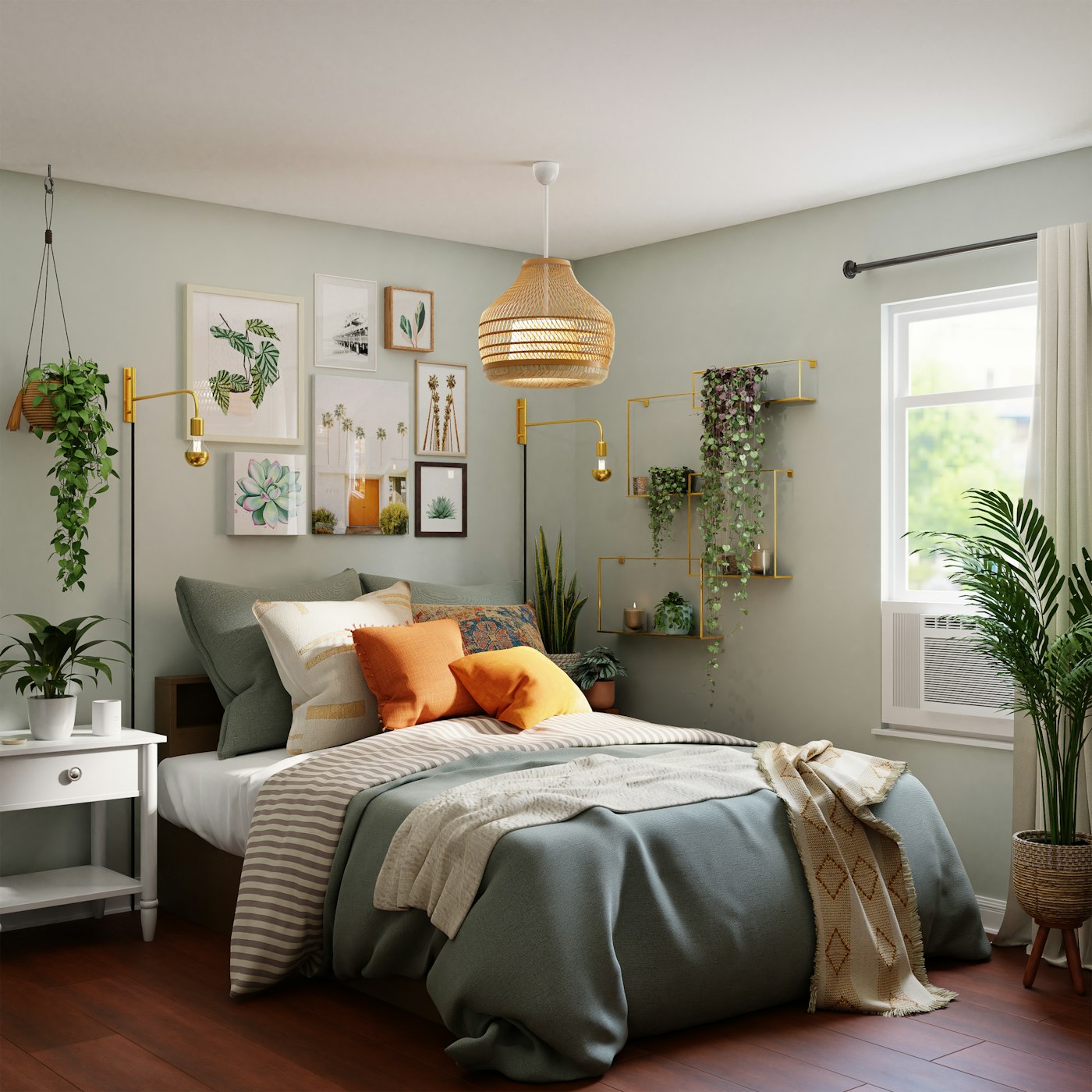
Temperature, air and texture
Most people sleep best in a cool room with breathable bedding. Natural fibres — linen, cotton, wool — regulate temperature far better than synthetic blends. Layer a light quilt rather than one heavy duvet, so you can adjust through the night.
Airflow is often overlooked. A ceiling fan on a low setting, or a window left slightly open, can transform sleep in a stuffy room. Keep the space under the bed as clear as possible so air can move.
Six decisions that help
- Choose the bed first. Everything else — rugs, lamps, art — is arranged around it.
- Keep the palette low-contrast. Two or three close tones, one deeper accent at most.
- Ban screens from the bedside. Or at least give them a drawer and a charging point away from the bed.
- Use warm, dimmable light. 2700K at low levels; no downlights directly over the pillow.
- Add a chair or bench. Somewhere to sit while you dress changes the room from a box to a place.
- Leave the walls quiet. A bedroom is not the room for the gallery wall; one or two pieces are enough.
The details that make it feel finished
An upholstered headboard, a pair of matching bedside tables and a rug that extends beyond the bed are the three elements that make a bedroom photograph well and live well. Beyond that, restraint is the luxury. Every object you remove gives the room a little more calm.
For evidence-based guidance on light, temperature and noise, the Sleep Foundation's bedroom environment guide is a useful, practical reference.
You do not need a large budget to get this right. A quiet palette, proper curtains and one lovely lamp will do more than an expensive bed frame. Our essay on creating a high-end look on a sensible budget explains where to spend and where to save.
Treat the bedroom as the most important room in the house, and it will quietly repay you every morning.

